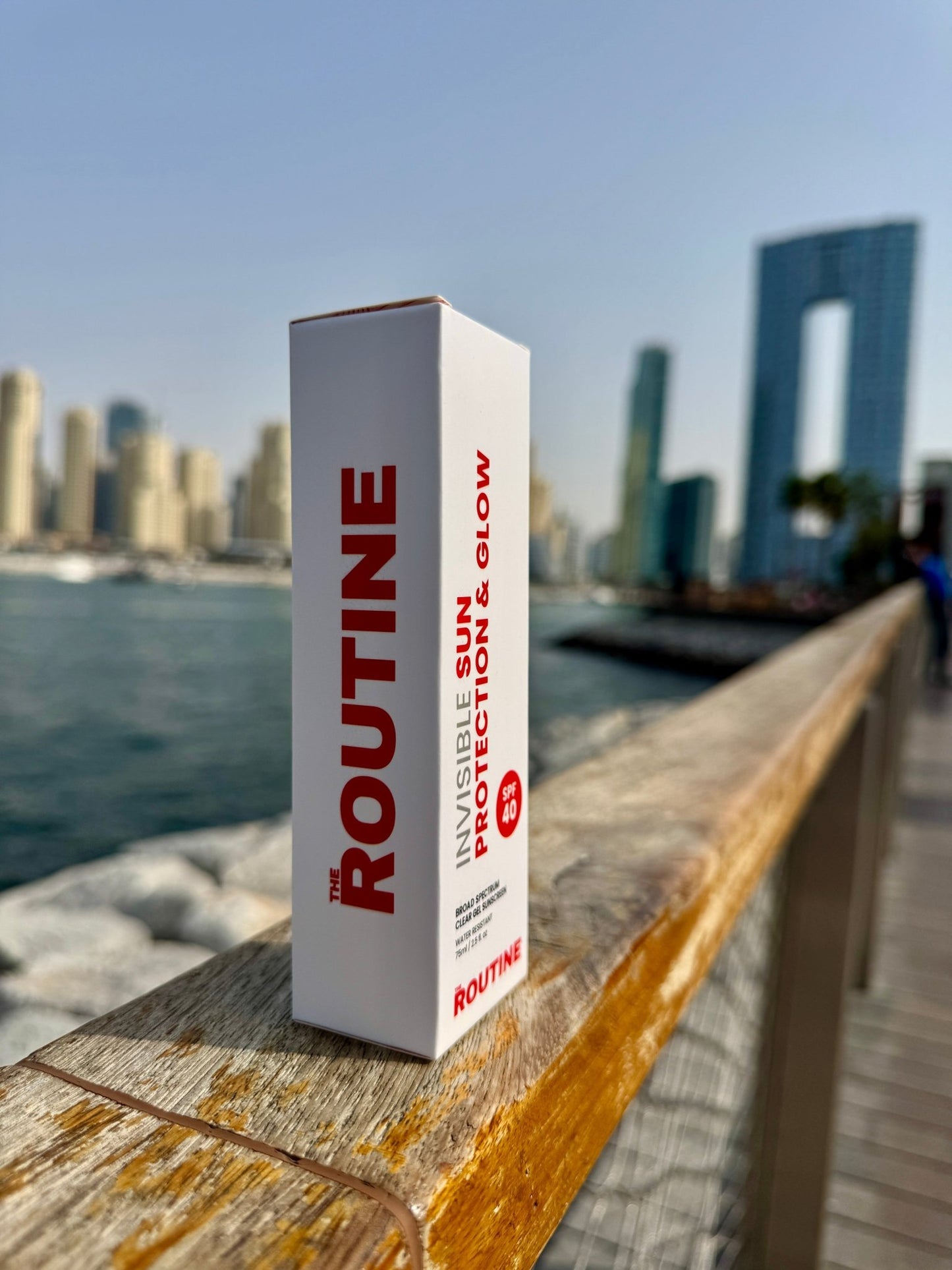
The Routine: Your Daily Invisible Sun Protection

Key Benefits of The Routine Invisible Sun Protection Gel


The Best Sunscreen For Hot & Humid Climates!
What to Look for in the Best Sunscreen for Hot & Humid Climates
Not all sunscreens perform well in heat and humidity. When choosing the right sunscreen for these conditions, it helps to focus on wearability rather than just SPF numbers.
Key things to look for include:
- A lightweight or gel-based texture
- Fast absorption without stickiness
- No white cast after application
- Comfortable wear in warm conditions
- Suitability for daily, repeated use
The best sunscreen for hot and humid climates is one that fits seamlessly into your routine. When sunscreen feels effortless, it is far more likely to be used consistently - and consistency is the most important factor in effective sun protection.
Lightweight Sunscreen vs Traditional Sunscreen in Humid Weather
In humid climates, texture matters as much as protection. Traditional cream-based sunscreens are often designed for occasional outdoor use, which can make them feel heavy, greasy, or occlusive when worn daily in heat.
Lightweight sunscreens, particularly gel or fluid textures, tend to perform better because they:
- Absorb faster into the skin
- Feel breathable rather than heavy
- Leave less residue or shine
- Sit more comfortably under makeup
For people living in hot and humid regions, lightweight sunscreen is often the difference between wearing SPF every day and avoiding it altogether. Daily comfort leads to better consistency, and consistency is what delivers real long-term protection.
Sunscreen for Daily Wear in Heat, Humidity, and Indoor Living
Sun exposure in hot climates does not only happen outdoors. UVA rays penetrate glass, meaning exposure continues while driving, sitting near windows, or working in bright indoor environments.
This makes daily sunscreen essential, but only if it feels comfortable enough to wear for long periods. The best sunscreen for daily use in hot and humid climates should:
- Feel invisible after application
- Remain comfortable for hours
- Work well under makeup or on bare skin
- Be easy to apply as part of a morning routine
When sunscreen feels appropriate for both indoor and outdoor use, it becomes part of everyday life rather than something reserved for beach days.
Why Hot & Humid Climates Need a Different Type of Sunscreen
Hot and humid climates place very different demands on sunscreen compared to cooler or drier environments. High temperatures, sweat, and moisture in the air can cause heavy sunscreens to feel uncomfortable, break down faster, or move around on the skin throughout the day.
In these conditions, the best sunscreen is one that feels lightweight, absorbs quickly, and remains comfortable even when you are moving between indoor and outdoor environments. This is especially important for daily wear, where sunscreen needs to work just as well for commuting, office use, and short bursts of sun exposure as it does for time spent outdoors.
Choosing a sunscreen designed for heat and humidity helps ensure consistent daily use, which is far more effective than relying on heavier formulas that are often skipped altogether.